
 Sulphuric Acid Emerg... Price range: $13.50 through $149.95 exc. GST
 Hydrogen Peroxide Em... Price range: $13.50 through $149.95 exc. GST
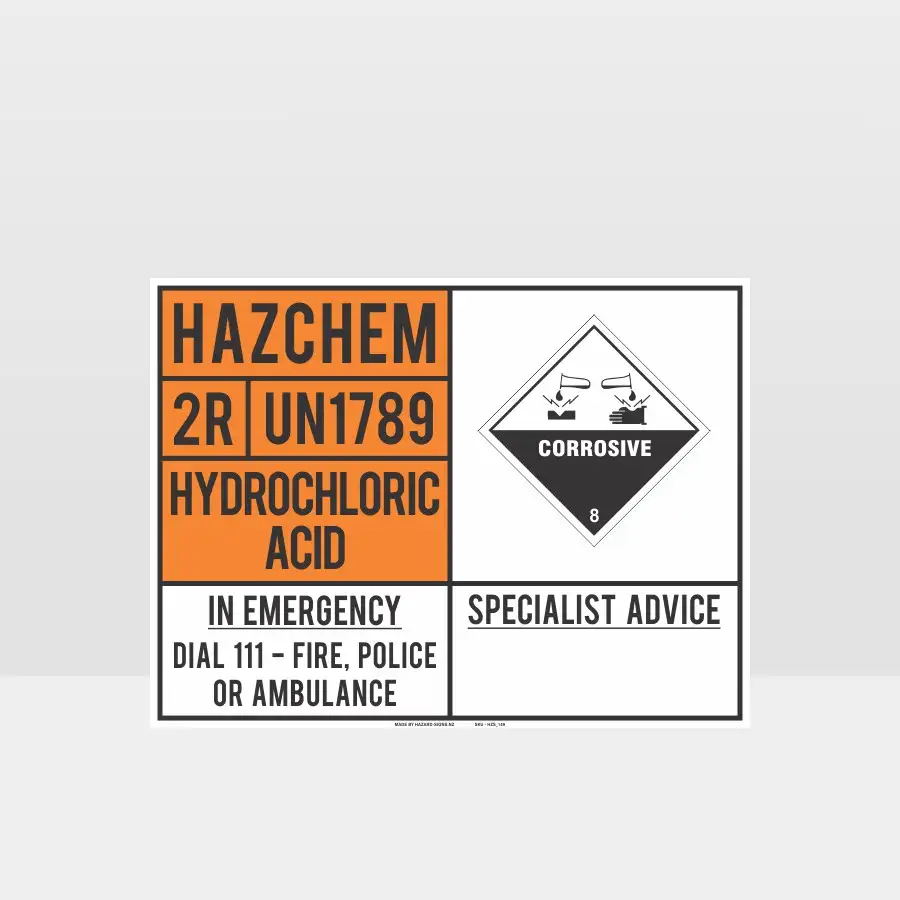
Hydrochloric Acid Emergency Information Panel Sign
Price range: $13.50 through $149.95 exc. GST
HAZCHEM Sign – Hydrochloric Acid Emergency Information Panel Sign
The “Hydrochloric Acid Emergency Information Panel Sign” is crucial for promoting safety, ensuring compliance with regulations, and guiding effective emergency response in the presence of hydrochloric acid. It provides critical details on the dangers, handling precautions, and actions to take during spills, exposure, or emergencies.
- Standard sizes available 300mm x 225mm, 450mm x 337mm, 600mm x 450mm, 800mm x 600mm 1200mm x 900mm.
- Laminated
- Supplied as an adhesive vinyl sticker or mounted on corflute, PVC, Magnetic material or ACM panel
- Meets industry standards when used appropriately
- 300 × 225 mm — Close-range / supplementary (≈≤5 m, not suitable for 10 m)
- 450 × 337 mm — Minimum for ~10 m viewing
- 600 × 450 mm — Recommended (10–15 m)
- 800 × 600 mm — Yard / gate (15–20 m)
- 1200 × 900 mm — Roadside / long approach (25–30 m)
“Not every splash is just a bit of Jif in the sink — Hydrochloric Acid means serious business. If you’re carting the stuff around, grab the Sulphuric Acid Emergency Information Panel Sign too, so your site ticks all the right compliance boxes.”
Hazardous Chemical Sign – Hydrochloric Acid Emergency Information Panel Sign
The “Hydrochloric Acid Emergency Information Panel Sign” is a critical safety tool used in industries and workplaces where hydrochloric acid (HCl) is handled, stored, or transported. Its primary purpose is to provide detailed information about the chemical’s hazards, safety precautions, and emergency response procedures. This sign plays a vital role in ensuring safety, regulatory compliance, and quick response during emergencies. Here’s an in-depth breakdown of its components and purposes:
1. Chemical Identification and Classification
- UN Number: Hydrochloric acid is identified by the UN number 1789, which is used globally to standardize information for the transportation and handling of hazardous materials.
- Chemical Name: The sign prominently displays “Hydrochloric Acid” to ensure that everyone can identify the substance being dealt with.
- Hazard Class (Pictograms): Hydrochloric acid is classified as a Class 8 corrosive substance. This class indicates that it can cause severe damage to living tissue and materials such as metal. The sign includes pictograms (corrosive symbols) indicating the danger to both skin and materials.
2. Hazard Warnings
- Health Hazards: Hydrochloric acid is highly corrosive and can cause severe burns to the skin, eyes, and mucous membranes upon contact. Inhalation of its vapors can result in respiratory irritation, coughing, choking, and potentially more severe respiratory damage.
- Environmental Hazards: A spill can cause significant environmental damage, particularly if it contaminates water sources, as hydrochloric acid lowers pH levels, leading to harmful effects on aquatic life.
- Physical Hazards: When mixed with water or other chemicals, hydrochloric acid can release toxic chlorine gas, posing additional dangers.
3. Safety Measures and Precautions
- Personal Protective Equipment (PPE): The sign typically includes information on the required PPE to handle hydrochloric acid safely. This may include:
- Acid-resistant gloves
- Full face shields or goggles
- Respiratory protection if working with high concentrations of fumes
- Acid-resistant aprons or full-body protective suits
- Handling Instructions: Provides guidance for safe handling, such as:
- Avoid inhaling fumes.
- Work in well-ventilated areas.
- Always add acid to water (never the reverse) to prevent violent reactions.
4. First Aid Instructions
In case of exposure to hydrochloric acid, the sign outlines first aid procedures, such as:
- Skin Contact: Rinse affected skin with plenty of water for at least 15-20 minutes. Remove contaminated clothing immediately.
- Eye Contact: Flush eyes with water for at least 15 minutes while holding eyelids apart, and seek medical attention immediately.
- Inhalation: Move the person to fresh air and administer oxygen if breathing is difficult. Seek medical help.
- Ingestion: If swallowed, do not induce vomiting. Rinse the mouth with water and seek medical attention immediately.
5. Emergency Response Information
The sign provides vital instructions in case of an emergency, such as a spill, fire, or accidental exposure:
- Spill and Leak Procedures:
- Isolate the area and ensure proper ventilation.
- Neutralize spills using appropriate materials, such as lime or soda ash.
- Wear proper PPE during the cleanup process.
- Firefighting Instructions: While hydrochloric acid itself is non-flammable, it can react with metals to produce flammable hydrogen gas. In the event of a fire, first responders should use dry chemical, foam, or carbon dioxide extinguishers.
- Emergency Contacts: The sign often includes important emergency contact numbers for on-site personnel, poison control centers, or hazardous material response teams.
6. Regulatory Compliance
- Compliance with Dangerous Goods Regulations: The panel ensures compliance with legal standards like the Globally Harmonized System of Classification and Labelling of Chemicals (GHS), the Occupational Safety and Health Administration (OSHA) in the U.S., and other regional or international guidelines.
- Transportation Compliance: If the hydrochloric acid is being transported, the sign must comply with international transportation regulations, such as the ADR (European Agreement concerning the International Carriage of Dangerous Goods by Road) or the IMDG Code (International Maritime Dangerous Goods Code).
7. Reducing Response Time
The detailed emergency response information on the sign helps reduce the time it takes for workers or emergency personnel to react in case of an incident. This includes:
- Neutralizing Spills: Instructions on what neutralizing agents to use for spills (e.g., lime or soda ash).
- Evacuation Plans: Guidance on whether evacuation is necessary in the event of a large spill or if toxic fumes are released.
8. Location and Placement
The sign is usually displayed in areas where hydrochloric acid is stored, processed, or transported, such as:
- Chemical storage rooms
- Industrial sites
- Laboratories
- Transport vehicles carrying hydrochloric acid
- Near pipelines or tanks containing hydrochloric acid
9. Example Information on a Hydrochloric Acid Emergency Panel:
- Chemical Name: Hydrochloric Acid (HCl)
- UN Number: 1789
- Hazard Class: 8 (Corrosive)
- PPE Requirements: Acid-resistant gloves, full face shield, respirator
- First Aid: Rinse skin or eyes with water for at least 15 minutes, seek medical help
- Emergency Procedures: Evacuate the area if necessary, ventilate the space, neutralize spills
- Fire Response: Use dry chemical or carbon dioxide extinguishers, avoid contact with metals
Importance:
- Immediate Hazard Awareness: Ensures that workers and emergency responders are fully informed about the hazards of hydrochloric acid and how to respond effectively in case of exposure or spill.
- Prevention of Accidents: Clear safety information reduces the likelihood of accidents during the handling and transportation of hydrochloric acid.
- Minimizing Health Risks: The sign helps reduce health risks by promoting safe handling practices and providing immediate instructions for first aid.
- Environmental Protection: In case of spills, the sign helps prevent environmental damage by providing instructions on proper containment and neutralization.
Specialist Advice Panel
Customers may specify their own emergency advice contact for this section (e.g., company HSE manager, approved emergency response provider, or third-party service).
If you wish to use 0800 CHEMCALL, please note that this service is operated by Responsible Care NZ and permission/approval must be obtained directly from them prior to use.
The Hydrochloric Acid EIP Sign displays essential emergency response details, including UN 1789, HAZCHEM 2R, and a Specialist Advice field.
Learn when and where these panels must be displayed under NZS 5433 in Emergency Information Panel Signs Explained.
The 2R code shows that hydrochloric acid is corrosive and can release toxic gases when reacting with other substances — responders should wear full PPE and avoid water jets. Find out what each letter and number on your HAZCHEM sign means in Understanding HAZCHEM Signs in New Zealand & Australia.
Hydrochloric Acid is classified as Class 8 – Corrosive Substances, which require secondary containment and compliant signage at storage and loading areas. Read the overview of DG classes and signage rules in Understanding Dangerous Goods Classes 1–9.
FAQs
-
Why do I need a Hydrochloric Acid Emergency Information Panel Sign?
It’s a legal requirement for the bulk transport of Hydrochloric Acid (UN1789) under HSNO and NZTA rules, ensuring emergency responders have all critical hazard and response information. -
What makes this different from a normal HAZCHEM sign?
A standard HAZCHEM sign shows only the class and UN number, while the EIP version provides extra panels such as Emergency Actions and Specialist Advice, required for bulk transport. -
What details go in the Specialist Advice panel?
You must include a 24-hour monitored emergency contact number, either for your business or a contracted emergency response provider. This ensures compliance and quick response in case of an incident.
If your site handles hydrochloric acid, don’t leave responders guessing — label it right and stay compliant!
Back it up with our Sulphuric Acid EIP Sign for full chemical safety coverage.
How to choose the right mounting options.
Corflute: short-term term less than 2 years outdoors
Thin PVC: Medium term, more than 2 years
ACM: Long term 5 years or more
Supplied as a sticker:
long-term digital print laminated for long-term use. With a life of 5 years or more. We use a Hi Tac vinyl which allows it to be applied to most surfaces.
Magnetic mounting option for the Hydrochloric Acid Emergency Information Panel Sign
Flexible, vehicle-grade magnetic placards with the Hydrochloric Acid Emergency Information Panel Sign printed on premium vinyl, laminated, and mounted to automotive magnetic sheeting. They stick to ferrous steel panels and remove without residue—ideal for vehicles that only carry DG sometimes.
Who they’re for
-
Contractors / couriers who transport Dangerous Goods occasionally
-
Hire or multi-use vehicles (no permanent signage)
-
Sites that swap classes depending on load (quick changeover)
-
Magnet: vehicle-grade sheet, 0.8–1.0 mm thick (30–40 mil), high-energy.
-
Face film: outdoor self-adhesive vinyl + UV laminate (gloss).
-
Operating temp: suitable from winter cold to summer heat (typical automotive range).
Where they work (and don’t)
-
Works on: painted steel panels that are flat, clean, and smooth.
-
Doesn’t work on: aluminium, stainless, plastics, composites, heavy body filler; vinyl wraps, ceramic coatings, heavily textured paint.
-
If customers have aluminium doors/ute trays, suggest self-adhesive or rigid ACM instead.
Fitment checklist
-
Clean & dry the panel (no wax/polish).
-
Warm, flat magnet—no curl.
-
Apply to flat steel only; press from centre out.
-
Do not bridge panel gaps, ribs or sharp curves.
-
Remove daily to clean/dry both surfaces; store flat.
-
In heavy rain/highway speeds, check edges haven’t lifted.
Care & maintenance
-
Remove and wipe after wet weather; store flat (never rolled tight).
-
Move position slightly each week to avoid differential fading.
-
Avoid use on freshly resprayed paint (allow full cure).
Compliance note
-
Magnet is a mounting method. The operator must ensure placards are the correct class, size, and securely affixed for the journey. Some carriers or site rules may require permanent/rigid placards—check your procedure.
For more information check out these links
-
WorkSafe NZ – Hazardous Substances Management
👉 WorkSafe NZ – Hazardous substances -
EPA NZ – HSNO Act guidance
👉 EPA NZ – Hazardous Substances and New Organisms (HSNO) Act -
United Nations GHS
👉 UN – Globally Harmonized System (GHS) - Why you need the correct Hazard sign
The mission of Hazard Signs NZ is to provide quality-made safety signs to all of New Zealand. Our great prices and convenient online ordering platform make us a preferred supplier to many NZ businesses. All our signs are designed and manufactured in Invercargill to meet the workplace health and safety needs of all businesses and industries in New Zealand.
Please note. We make some of our safety signs to order and it may take 5 to 10 business days to receive. If you require your order urgently, please don’t hesitate to contact us to confirm an estimated delivery date prior to placing your order.
If you are not sure about what sign you need for your business, just contact us at +6432183350 or email us and we will make it ready for you.

| Material | Self Adhesive Vinyl Sticker, Magnetic Material, Corflute Sheet, Thin PVC Sheet, ACM Metal sheet |
|---|---|
| Size | 1200mm x 900mm, 800mm x 600mm, 900mm x 675mm, 1200mm x 800mm, 600mm x 900mm, 300mm x 225mm, 450mm x 337mm, 600mm x 450mm |
You must be logged in to post a review.
Related products
-


Class 1.1 Explosive Sign
Price range: $13.95 through $89.95 exc. GSTSKU: hazardous_002_009
-

Liquified Petroleum Gas Sign
Price range: $13.50 through $149.95 exc. GSTSKU: HZS101
-
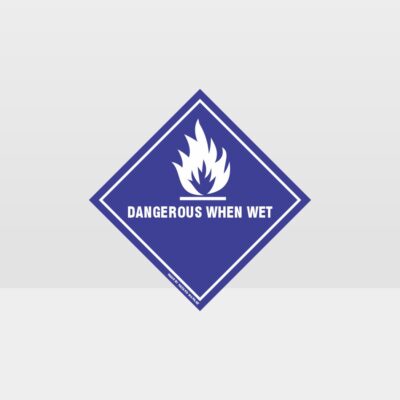
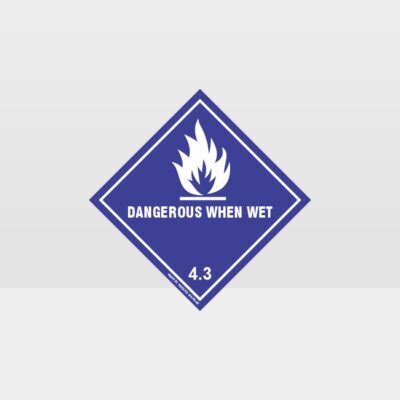
Class 4.3 Dangerous When Wet Sign
Price range: $13.95 through $89.95 exc. GSTSKU: hazardous_032_033
-

Environmentally Hazardous Substance Hazchem Sign
Price range: $13.50 through $149.95 exc. GSTSKU: HZS104
There are no reviews yet.