Confined Space Signs in New Zealand: Entry Restrictions, Hazards and Workplace Controls
Confined spaces can be some of the highest-risk areas in a workplace. Tanks, pits, silos, vessels, manholes, hoppers and service chambers may look ordinary from the outside, but they can contain serious hazards such as low oxygen, toxic gases, flammable atmospheres, engulfment risks or difficult rescue conditions.
In New Zealand, confined space signage should be treated as part of a wider workplace risk-control system. A sign alone does not make a confined space safe, but clear Confined Space Signs, No Entry Signs and Authorised Personnel Only Signs can help stop unauthorised access before someone enters the wrong area. WorkSafe New Zealand accepts AS 2865 Confined spaces as the current state of knowledge on confined-space entry work.
What is a confined space?
A confined space is not simply a small room. It is generally an enclosed or partly enclosed area that is not designed for continuous human occupancy and may present hazards due to its atmosphere, contents, access limitations or work conditions.
Common examples include:
Tanks and process vessels
Pits and sumps
Manholes and access chambers
Silos and hoppers
Enclosed drains or ducts
Utility chambers
Wastewater and water-treatment areas
Some agricultural or industrial storage areas
A restricted room, plant room or storage area is not automatically a confined space. The actual hazards and work conditions need to be assessed by the business or site operator.
Why confined spaces are high risk
Confined spaces can become dangerous quickly. WorkSafe notes that people continue to die when entering confined spaces, and in some incidents would-be rescuers also become victims.
Possible confined space hazards include:
Oxygen-deficient atmospheres
Oxygen-enriched atmospheres
Toxic gases, fumes or vapours
Flammable or explosive atmospheres
Engulfment by liquids, grain, sludge or loose material
Mechanical or stored-energy hazards
Heat stress
Poor lighting or difficult access
Limited emergency rescue options
Because these risks can be severe, signage should support proper access controls rather than replace them.
What signs are used for confined spaces?
The most common sign types include:
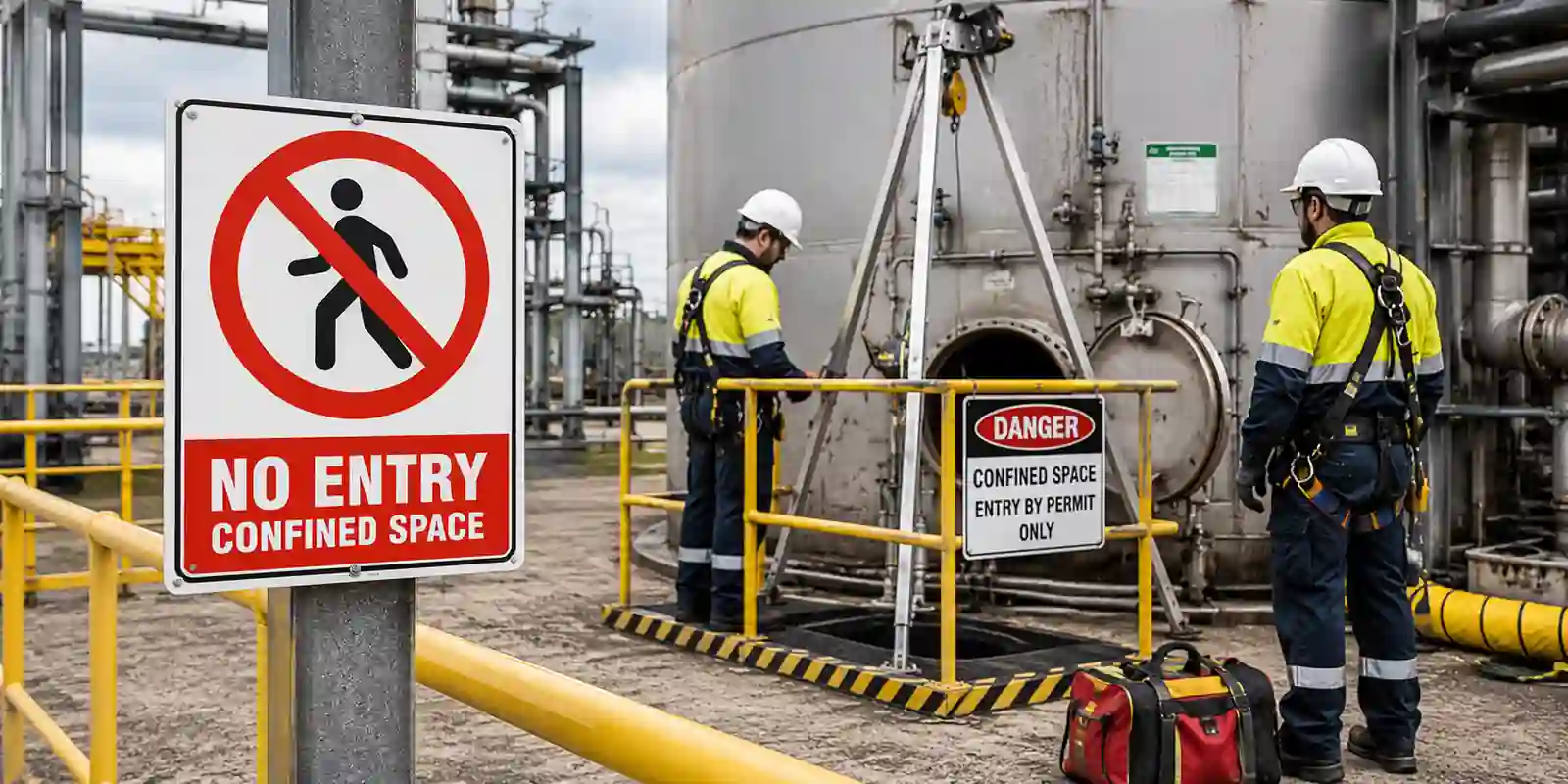
No Entry – Confined Space
A No Entry Confined Space Sign clearly tells people not to enter the area. This is useful at tanks, pits, hatches, manholes and controlled access points.
Authorised Personnel Only
An Authorised Personnel Only Sign is useful where entry is restricted to trained, approved or permitted workers.
Permit Required Before Entry
Where a formal permit process is used, a sign such as Confined Space Entry Permit Required helps reinforce the site procedure.
Danger or Warning Signs
Some confined spaces may need hazard-specific signage, such as toxic gas, oxygen deficiency, flammable atmosphere, lockout or rescue-related signs.
Are confined space signs legally required in New Zealand?
The safest wording is this: signage may form part of a workplace’s risk-control system, but it is not the full control system by itself.
Under New Zealand workplace health and safety duties, PCBUs must manage risks so far as is reasonably practicable. WorkSafe’s general risk-management guidance explains duties under HSWA and the Health and Safety at Work regulations.
For confined spaces, the site may also need risk assessment, isolation, atmospheric testing, ventilation, training, permits, standby workers and emergency planning. A sign helps communicate the restriction, but it does not replace those controls.
Signs are only one part of confined space control
Before confined space entry, a workplace may need to consider:
Identifying whether the area is a confined space
Assessing the hazards and risks
Avoiding entry where possible
Isolating energy, machinery or substances
Testing the atmosphere
Ventilating the space
Using an entry permit system
Ensuring workers are trained and competent
Providing communication and standby arrangements
Planning emergency rescue before entry starts
WorkSafe’s confined space guidance highlights hazard identification, risk assessment and controlling risks by elimination or minimisation where elimination is not reasonably practicable.
Common confined space hazards and useful sign messages
| Situation | Useful sign message |
|---|---|
| General confined space access | No Entry – Confined Space |
| Entry only for trained workers | Authorised Personnel Only |
| Permit-controlled entry | Confined Space Entry Permit Required |
| Low oxygen risk | Danger – Oxygen Deficient Atmosphere |
| Toxic gas risk | Danger – Toxic Gas |
| Flammable atmosphere risk | No Smoking / No Ignition Sources |
| Mechanical hazard | Lock Out Before Entry |
| General restricted access | Restricted Area / No Entry |
Confined space signs should be placed where people can see the warning before entering or crossing into the controlled area.
Good locations include:
Beside access hatches
On gates or barriers
Near manholes or entry covers
At tank access points
On doors to controlled plant areas
At entry routes leading to pits or vessels
The sign should not be hidden when a hatch, door or gate is opened. If the access point is outdoors, choose a durable material suitable for weather exposure.
Confined space signs vs restricted access signs
A Restricted Access Sign tells people that entry is controlled. A No Entry Confined Space Sign gives a more specific message: the area is a confined space and general entry is prohibited.
For general staff-only areas, an Authorised Personnel Only Sign may be enough. For tanks, pits, vessels or identified confined spaces, a specific confined space sign is usually clearer.
Choosing the right material
For confined space signage, material choice depends on the location.
Self-adhesive vinyl is suitable for smooth indoor surfaces, panels and clean walls.
PVC signs are lightweight and useful for indoor or sheltered rigid signage.
ACM signs are more durable for outdoor, industrial and long-term installations.
Corflute signs may suit temporary worksites or short-term access control.
For outdoor industrial areas, ACM is often the better long-term option.
Recommended confined space signs
Useful signs for this type of workplace include:
No Entry Confined Space Sign
Authorised Personnel Only Sign
No Entry Sign
Restricted Area Sign
Permit Required Before Entry Sign
Danger Confined Space Sign
No Smoking / No Ignition Sources Sign
For related access-control signage, browse our Prohibition Signs, No Entry Allowed Signs and Caution Restricted Area Signs ranges.
FAQ
What is a confined space in New Zealand?
A confined space is generally an enclosed or partly enclosed area that is not designed for continuous occupancy and may contain hazards such as unsafe atmospheres, engulfment risks or difficult access and rescue conditions.
Is a confined space sign enough to control entry?
No. A sign is a visual communication tool. It should support wider controls such as risk assessment, isolation, atmospheric testing, training, permits, standby arrangements and emergency planning.
Where should a confined space sign be installed?
Install the sign at or before the access point, such as a hatch, gate, barrier, door, manhole or entry route. It should be visible before someone enters the controlled area.
Do confined spaces require an entry permit?
Many workplaces use permit systems for confined space entry, but the exact requirements depend on the site, hazards and work being carried out. The workplace should follow its own risk assessment and confined space procedures.
What is the difference between a confined space sign and a restricted access sign?
A restricted access sign controls general entry. A confined space sign gives a more specific warning that the area may involve confined space hazards and should not be entered without appropriate controls.
Can confined space signs be customised?
Yes. Custom wording can be useful where the site needs to include specific instructions such as “Entry Permit Required”, “Authorised Personnel Only” or site contact details.