Class 5.1 Signs Explained: Oxidiser vs Oxidising Agent vs Oxygen Hazard
When it comes to transporting or storing oxidising substances, the correct signage is critical for both compliance and safety. Class 5.1 substances are dangerous goods that can cause or intensify a fire, making them a serious hazard if not properly managed.
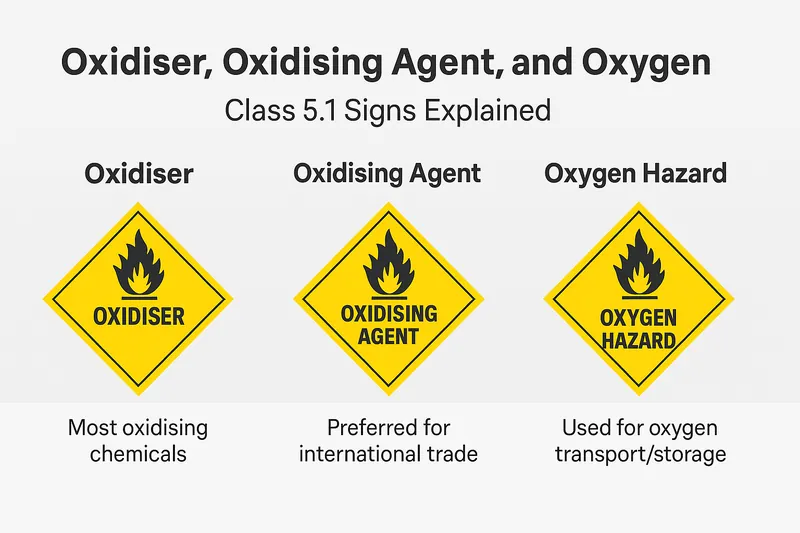
But here’s the catch — depending on where you look, you’ll see different versions of Class 5.1 signs:
-
Oxidiser
-
Oxidising Agent
-
Oxygen Hazard
So, which one do you actually need? Let’s break down the differences and clear up the confusion.
🔎 What Are Class 5.1 Substances?
Class 5.1 substances are oxidising agents. These aren’t necessarily combustible themselves, but they can release oxygen or otherwise intensify combustion. In plain English: they make things burn more easily and burn hotter.
Examples include:
-
Hydrogen peroxide
-
Nitrates
-
Medical oxygen
-
Bleaching agents
Because of this risk, the use of clear, durable signage is required under:
-
UN Dangerous Goods Regulations
-
NZS/AS 1319:1994 – Safety Signs for the Occupational Environment
-
NZ Land Transport Rule: Dangerous Goods 2005
👉 For official guidance, see WorkSafe NZ – Hazardous Substances.
🔶 The Three Wording Variants
1. Oxidiser Sign
The most common wording in New Zealand and Australia. It follows the standard UN format and is used for most oxidising chemicals during transport and storage.
➡️ Shop our Class 5.1 Oxidiser Signs.
2. Oxidising Agent Sign
This is an alternative international wording, commonly seen in global shipping and some overseas compliance frameworks. It means exactly the same thing as “Oxidiser,” but may be preferred if you’re trading internationally.
➡️ Browse Class 5.1 Oxidising Agent Signs.
3. Oxygen Hazard Sign
This version is still Class 5.1, but it is specific to oxygen. You’ll often see it used for:
-
Medical oxygen cylinders
-
Industrial oxygen suppliers
-
Aviation oxygen supply chains
It helps clearly identify oxygen as the oxidising hazard.
➡️ Order Class 5.1 Oxygen Hazard Signs.
📌 Which One Should You Use?
-
General oxidising chemicals → Either Oxidiser or Oxidising Agent is fine (both are compliant).
-
Oxygen transport or storage → Use the Oxygen Hazard Sign for clarity.
-
International trade → “Oxidising Agent” may align better with overseas terminology.
👉 All three are compliant under NZ and AU regulations, so you won’t get caught out — but choosing the right version makes your workplace signage more accurate and professional.
📐 Size and Placement Requirements
-
120 mm signs → Suitable for cylinders, cabinets, and small-scale use.
-
250 mm minimum → Required for transport placards.
-
400 mm, 600 mm, 800 mm → Best for bulk storage, depots, and outdoor visibility.
Always ensure signs are:
-
Weatherproof and durable.
-
Mounted at eye level.
-
Visible from a reasonable distance.
✅ Compliance Recap
-
All three variants represent UN Class 5.1 Dangerous Goods.
-
Recognised under NZS/AS 1319:1994 and the NZ Land Transport Rule: Dangerous Goods 2005.
-
Use the version that best fits your substance type and context.
📝 Conclusion
Whether you choose Oxidiser, Oxidising Agent, or Oxygen Hazard, you’re covering the same hazard class. The difference is in the wording and context of use.
At Hazard Signs NZ, we supply all three versions, printed on long-term laminated vinyl and available in multiple mounting options (PVC, Corflute, ACM).
👉 Shop our full range of Class 5.1 Signs today and keep your workplace and transport operations compliant.